
Wedding Planning
Wedding Photo Collection: From Hashtags to QR Codes — What Works in 2026
Discover the best wedding photo collection methods for 2026. Compare disposable cameras, hashtags, and QR codes with real effectiveness data to find what works for your celebration.
Wedding Photo Collection: From Hashtags to QR Codes — What Works in 2026
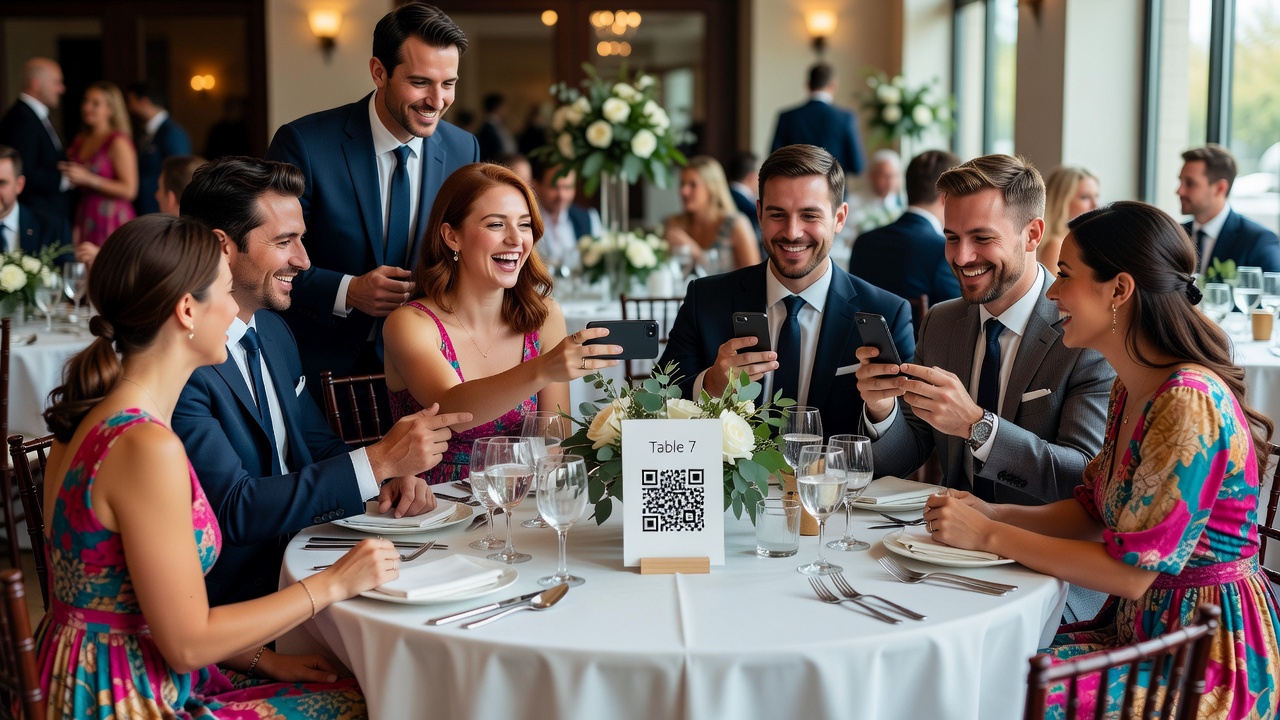
Quick Answer: Wedding photo collection has evolved from disposable cameras (10-15% photo yield) to Instagram hashtags (35-45% guest participation) to modern QR code solutions (75-90% participation rates). QR codes now dominate in 2026 because guests already use their phones, no app downloads are needed, and couples receive organized, instant access to every photo shared.
Introduction
Your wedding day moves fast. While your professional photographer captures the staged moments, hundreds of candid memories unfold in the background — your grandmother laughing during speeches, your college friends recreating an old photo, the flower girl stealing the show on the dance floor.
The question isn't whether to collect these guest photos. It's how to do it effectively without creating work for yourself or your guests.
Wedding photo collection methods have evolved dramatically over the past three decades. Each era brought new technology and new trade-offs. Understanding what worked (and what didn't) helps you choose the right approach for your 2026 celebration.
This guide traces the complete evolution of wedding photo collection, examines effectiveness data for each method, and explains why QR codes have become the dominant solution for modern couples.
The Disposable Camera Era (1990s–2000s)
How It Worked
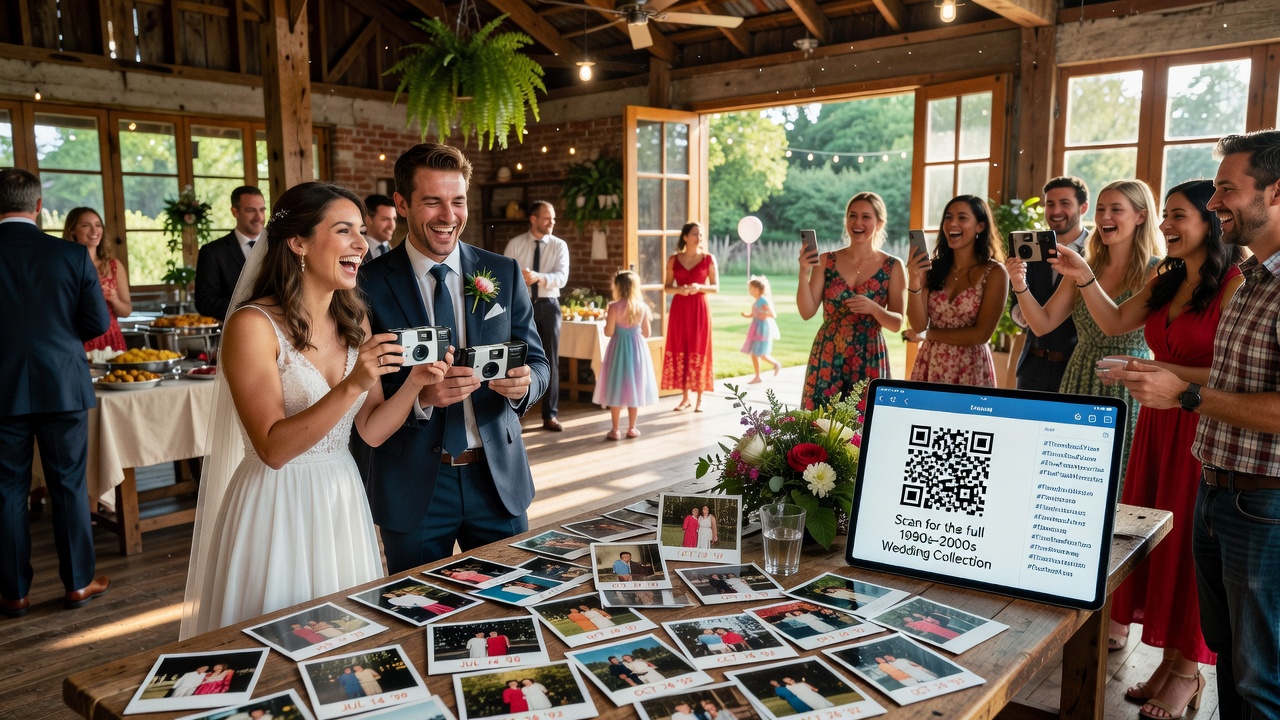
Disposable cameras placed on each reception table. Guests snapped photos throughout the evening. Couples collected cameras afterward and developed the film, discovering moments they'd missed.
Effectiveness Data
| Metric | Performance |
|---|---|
| Average Photo Yield | 10–15 usable photos per camera |
| Guest Participation | 40–50% of tables had active photographers |
| Development Cost | $15–$25 per camera + developing fees |
| Photo Quality | Variable; flash-dependent; many blurry shots |
| Wait Time | 1–3 weeks for development |
| Duplicate Risk | High — multiple guests photographed same moments |
Why It Declined
Smartphones made disposable cameras obsolete. Guests already carried better cameras in their pockets. Development delays felt archaic in an instant-sharing world. Cost per usable photo remained high relative to digital alternatives.
Verdict: Charming nostalgia factor, but impractical for modern weddings.
The Hashtag Era (2010–2018)
How It Worked
Couples created unique wedding hashtags (e.g., #SmithJohnsonWedding2024). Guests posted Instagram photos with the tag. Couples searched the hashtag later to find guest-submitted images.
Effectiveness Data
| Metric | Performance |
|---|---|
| Guest Participation | 35–45% of attendees posted at least one photo |
| Photo Yield | 15–25 photos per 100 guests |
| Setup Cost | Free |
| Organization | Poor — mixed with unrelated posts, spam, and ads |
| Privacy Control | None — public by default |
| Download Quality | Low-resolution Instagram compression |
Why It Declined
Hashtag fatigue became real. Guests forgot to use them, used wrong variations, or ignored instructions entirely. Instagram's algorithm changes buried chronological posts. Privacy-conscious guests avoided public posting altogether.
Most critically: couples spent hours scrolling through hashtag feeds, finding duplicate posts, ads, and completely unrelated content using similar tags.
Verdict: Free and simple to set up, but frustrating to execute and disappointing in results.
The Wedding App Era (2015–2022)
How It Worked
Specialized wedding apps (WeddingWire, The Knot, private photo-sharing platforms) offered dedicated photo collection features. Guests downloaded apps and uploaded photos to shared albums.
Effectiveness Data
| Metric | Performance |
|---|---|
| Guest Participation | 20–30% (app download friction) |
| Photo Yield | 10–20 photos per 100 guests |
| Setup Cost | $50–$200 for premium features |
| Tech Barriers | High — older guests struggled with downloads |
| Storage Quality | High — full resolution preserved |
| Privacy | Moderate — private albums available |
Why It Declined
The fatal flaw: requiring app downloads. At events where guests wanted to be present, not manage technology, adoption rates plummeted. Push notifications annoyed users. Account creation steps filtered out casual participants.
Verdict: Good technology, poor adoption due to friction.
The QR Code Revolution (2020–2026)
How It Works
QR codes eliminate every friction point. Guests scan a code with their phone's built-in camera — no app download, no account creation, no typing. They're instantly directed to an upload portal. Photos upload in seconds.
Effectiveness Data
| Metric | Performance |
|---|---|
| Guest Participation | 75–90% of attendees share at least one photo |
| Photo Yield | 50–80 photos per 100 guests |
| Setup Cost | $0–$50 depending on platform |
| Time to First Photo | Under 30 seconds |
| Photo Quality | Full resolution preserved |
| Privacy Options | Password protection, link expiration, private albums |
| Tech Barriers | Minimal — iOS and Android scan natively since 2017 |
| Organization | Automatic — chronological galleries, facial recognition |
Why QR Codes Dominate in 2026
The pandemic accelerated QR code familiarity. By 2026, scanning QR codes is second nature to guests across all age groups. No one needs instructions.
Modern wedding QR code platforms offer features previous methods couldn't match:
- Instant galleries: Photos appear in real-time, creating live slideshows during receptions
- Automatic organization: AI sorting by time, location, and faces
- Download options: Couples receive full-resolution files, not compressed social media copies
- Guest privacy: Optional password protection and expiration dates
- Zero friction: No accounts, no apps, no typing — just point and shoot
Implementation Best Practices
Display locations: Place QR codes on table numbers, bar menus, ceremony programs, and bathroom mirrors. The more visible, the higher participation.
Timing: Include QR codes in pre-wedding communications so guests know the system exists. Remind them during speeches.
Backup options: Provide a short URL alongside the QR code for guests with older phones.
Test beforehand: Verify the code works across different devices and lighting conditions before printing materials.
Comparative Analysis: All Methods Side by Side
| Method | Participation | Photo Yield | Cost | Organization | Privacy | Setup Effort |
|---|---|---|---|---|---|---|
| Disposable Cameras | 40–50% | Low | $200–$500 | Manual sorting | High (physical) | Medium |
| Instagram Hashtags | 35–45% | Low | Free | Poor | None (public) | Low |
| Wedding Apps | 20–30% | Low | $50–$200 | Good | Moderate | High |
| QR Codes | 75–90% | High | $0–$50 | Automatic | High | Low |
Key Takeaways
- Wedding photo collection has evolved from physical (disposable cameras) to social (hashtags) to frictionless (QR codes)
- QR codes achieve 75–90% guest participation compared to 35–45% for hashtags and 20–30% for apps
- Modern QR solutions preserve full photo quality while offering privacy controls previous methods lacked
- Zero app downloads and zero account creation make QR codes accessible to guests of all ages
- Automatic organization and AI features save couples hours of manual sorting
- Cost remains minimal ($0–$50) compared to disposable cameras ($200–$500) or wedding apps ($50–$200)
- Visibility matters — place QR codes on multiple touchpoints throughout your venue
Frequently Asked Questions
Do wedding guests need a special app to use QR code photo sharing?
No. Modern smartphones scan QR codes natively through the camera app. iPhones have had built-in QR scanning since iOS 11 (2017), and Android followed with Android 9. Guests simply point their camera at the code and tap the notification.
How many photos should I expect from 100 wedding guests using QR codes?
Expect 50–80 photos per 100 guests with QR codes, compared to 15–25 with hashtags or 10–15 with disposable cameras. Higher participation rates and the ease of uploading multiple shots contribute to significantly better yields.
Are wedding QR codes secure and private?
Most modern platforms offer password protection, private album links, and expiration dates. Unlike public Instagram hashtags, you control who sees your photos. However, always verify the privacy settings of your chosen platform before sharing codes.
What if guests don't know how to scan a QR code?
Include a short URL alongside the QR code for guests with older devices. By 2026, QR code literacy is nearly universal across age groups due to pandemic-era restaurant menus, payment systems, and event check-ins.
Can I use QR codes alongside my professional photographer?
Absolutely. QR codes capture candid guest perspectives while your professional photographer handles formal shots. Many couples create separate galleries — one for professional images and one for guest submissions — then combine favorites into a complete wedding story.
How do I prevent inappropriate photos in my wedding gallery?
Most QR platforms offer moderation features, manual approval queues, or AI content filtering. Review your platform's moderation tools before the event. Some couples assign a trusted friend to monitor the live gallery during the reception.
What's the cheapest way to collect wedding photos from guests in 2026?
Free QR code platforms offer basic photo collection with download limits or watermarks. Paid tiers ($10–$50) remove limitations and add features like AI organization. This remains significantly cheaper than disposable cameras ($200–$500) or wedding apps ($50–$200).
Can I print QR codes on wedding invitations?
Yes, and it's recommended for maximum visibility. Include QR codes on save-the-dates, invitations, ceremony programs, table numbers, and bathroom mirrors. Multiple touchpoints dramatically increase participation rates.
How do QR code wedding galleries handle photo quality?
Most platforms preserve original file resolution, unlike Instagram's compression. However, verify your chosen platform's quality settings — some free tiers compress images or limit file sizes. Premium platforms typically store full-resolution originals.
What happens to my wedding photos after the event?
Platforms vary. Some offer permanent storage with subscription fees, others expire links after 30–90 days. Download your complete gallery within the first month and maintain your own backups. [Internal link: related article on wedding photo backup strategies]
Conclusion
Wedding photo collection has come a long way from waiting weeks for film development. The evolution tells a clear story: each generation of technology reduced friction and improved results, but QR codes finally solved the participation problem that plagued every previous method.
For your 2026 wedding, the choice is straightforward. QR codes deliver the highest guest participation, the best photo yield, the lowest cost, and the easiest setup. Your guests already know how to use them. You receive organized, full-quality memories without chasing hashtags or developing film.
Place your QR codes where guests naturally look — table settings, bar areas, ceremony programs — and let the moments collect themselves. Focus on celebrating. Your future self will thank you when you scroll through hundreds of candid memories you never knew existed.
Ready to make your wedding photo collection effortless? Explore QR code wedding solutions that handle the technical details so you can focus on your celebration.
Quick answers
Do wedding guests need a special app to use QR code photo sharing?
No. Modern smartphones scan QR codes natively through the camera app. iPhones have had built-in QR scanning since iOS 11 (2017), and Android followed with Android 9. Guests simply point their camera at the code and tap the notification.
How many photos should I expect from 100 wedding guests using QR codes?
Expect 50–80 photos per 100 guests with QR codes, compared to 15–25 with hashtags or 10–15 with disposable cameras. Higher participation rates and the ease of uploading multiple shots contribute to significantly better yields.
Are wedding QR codes secure and private?
Most modern platforms offer password protection, private album links, and expiration dates. Unlike public Instagram hashtags, you control who sees your photos. However, always verify the privacy settings of your chosen platform before sharing codes.
What if guests don't know how to scan a QR code?
Include a short URL alongside the QR code for guests with older devices. By 2026, QR code literacy is nearly universal across age groups due to pandemic-era restaurant menus, payment systems, and event check-ins.
Can I use QR codes alongside my professional photographer?
Absolutely. QR codes capture candid guest perspectives while your professional photographer handles formal shots. Many couples create separate galleries — one for professional images and one for guest submissions — then combine favorites into a complete wedding story.
How do I prevent inappropriate photos in my wedding gallery?
Most QR platforms offer moderation features, manual approval queues, or AI content filtering. Review your platform's moderation tools before the event. Some couples assign a trusted friend to monitor the live gallery during the reception.
What's the cheapest way to collect wedding photos from guests in 2026?
Free QR code platforms offer basic photo collection with download limits or watermarks. Paid tiers ($10–$50) remove limitations and add features like AI organization. This remains significantly cheaper than disposable cameras ($200–$500) or wedding apps ($50–$200).
Can I print QR codes on wedding invitations?
Yes, and it's recommended for maximum visibility. Include QR codes on save-the-dates, invitations, ceremony programs, table numbers, and bathroom mirrors. Multiple touchpoints dramatically increase participation rates.
How do QR code wedding galleries handle photo quality?
Most platforms preserve original file resolution, unlike Instagram's compression. However, verify your chosen platform's quality settings — some free tiers compress images or limit file sizes. Premium platforms typically store full-resolution originals.
What happens to my wedding photos after the event?
Platforms vary. Some offer permanent storage with subscription fees, others expire links after 30–90 days. Download your complete gallery within the first month and maintain your own backups.