
Photography
Disposable Camera Alternative: Why Eco-Conscious Couples Are Ditching Single-Use Cameras at Filipino Weddings
A disposable camera alternative isn't just a trend — it's a sustainability choice that keeps plastic waste and toxic chemicals out of Philippine landfills.
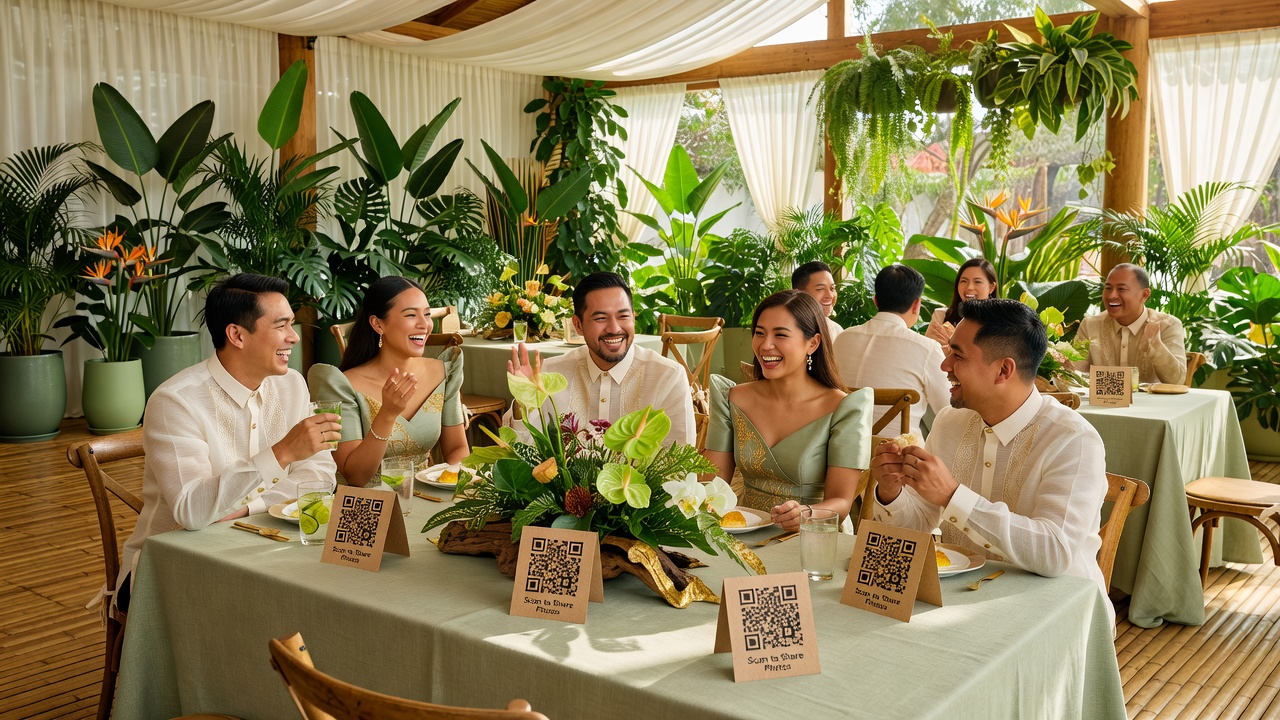
Choosing a disposable camera alternative for your Filipino wedding is one of the simplest sustainability wins you can make. Walk into any reception and you'll spot them: colorful plastic cameras on every table, waiting for guests to snap candid moments. It's a charming tradition — your titas and barkada capturing the real moments. But each of those disposable cameras carries an environmental price tag that lasts far longer than your wedding day.
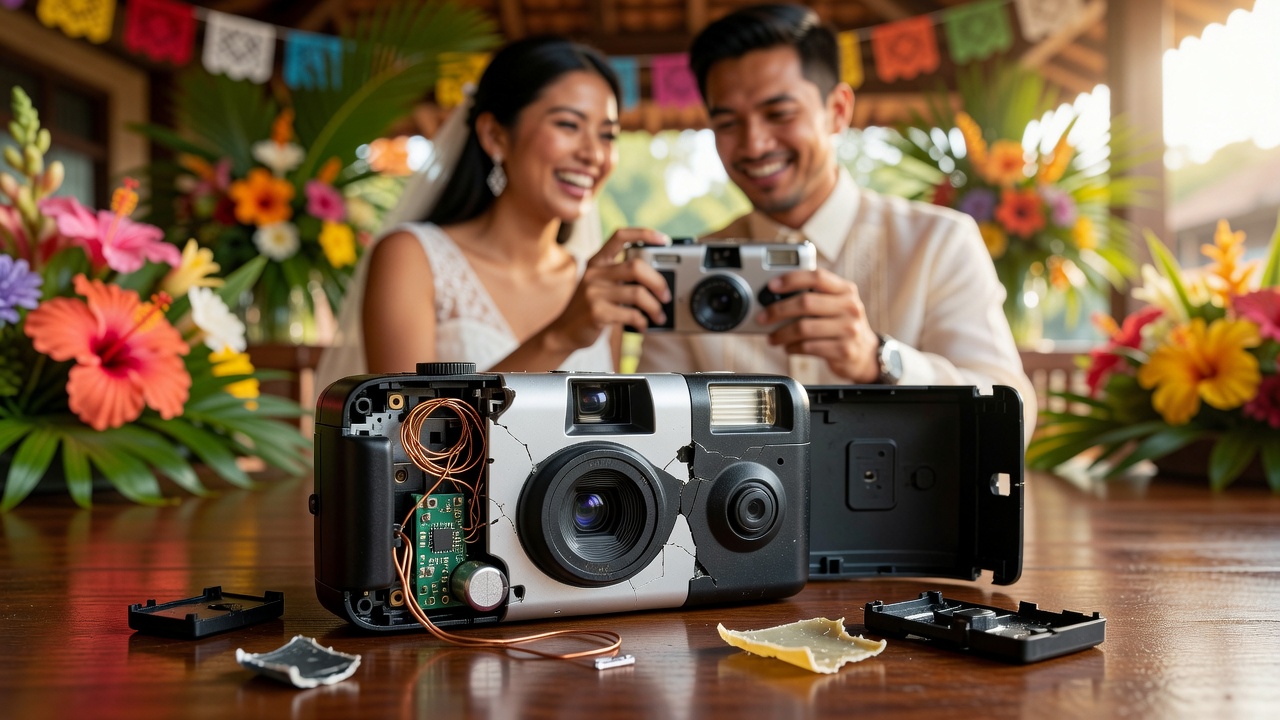
Every year, millions of single-use cameras end up in landfills. Their plastic bodies, chemical-laden film, and non-recyclable components contradict everything an eco-conscious kasal should stand for. A disposable camera alternative gives you better photos, more control, and a cleaner conscience.
The Plastic Problem: What's Really Inside a Disposable Camera
At first glance, a disposable camera looks simple — a cardboard wrapper around a plastic box. Peel it back and you'll find a complex assembly of materials, almost none recyclable in the Philippines.
The outer body is polystyrene or ABS plastic — petroleum-based polymers. Inside: a viewfinder, flash housing, film advance mechanism, a circuit board, an AA alkaline battery, and a film cartridge containing acetate-based film coated with light-sensitive silver halide crystals.
None of these components are designed to be separated or recycled. The camera is a sealed unit. After the last frame, a lab technician cracks it open in a darkroom, extracts the film, and tosses the body — plastic, battery, circuit board, and all — into the trash. Multiply that by 10 to 30 cameras per Filipino wedding, and that's a significant pile of non-biodegradable waste from a single celebration.
In the Philippines — consistently ranked among the top ocean plastic polluters — adding disposable camera waste is especially problematic. Those plastic bodies sit in landfills for centuries, or find their way into waterways and the ocean.
The Chemical Processing Impact Nobody Warns You About
The chemical processing required to develop disposable camera film adds another layer of environmental harm most couples never consider.
Color film development (the C-41 process) involves chemical baths with seriously toxic compounds:
- Hydroquinone — a developing agent classified as a potential carcinogen and aquatic toxin.
- Silver halide compounds — light-sensitive crystals. During processing, dissolved silver — a heavy metal toxic to aquatic microorganisms — enters wastewater.
- Color developers (CD-3, CD-4) — paraphenylenediamine-based compounds that resist breakdown in water treatment.
- Bleach-fix solutions — containing ammonium thiosulfate and EDTA, which mobilize heavy metals in soil and water.
- Formaldehyde stabilizers — a known carcinogen used in the final wash to preserve images.
In the Philippines, where smaller photo labs may lack advanced wastewater treatment, these chemicals can enter local water systems directly. An estimated 2,000 to 3,000 tons of silver enter wastewater streams annually from photographic processing alone.
The irony: after all that chemical processing, disposable camera photo quality is objectively mediocre. Fixed-focus plastic lenses and limited exposure control mean you're trading environmental damage for photos that are often blurry and poorly exposed.
Why a Disposable Camera Alternative Gives You Better Photos With Zero Chemical Waste
This is where sustainable wedding photography gets exciting. A disposable camera alternative doesn't mean giving up candid guest photos — it means upgrading to better results with a fraction of the environmental impact.
QR Code Photo Sharing: The Modern Disposable Camera Alternative
The most elegant disposable camera alternative for Filipino weddings is QR code-based photo sharing. Place a small card on each reception table with a QR code. Guests scan it, and it opens a shared gallery where they upload every photo and video — no app download needed.
This approach has several advantages over disposable cameras:
- Zero physical waste — no plastic, no batteries, no chemicals
- Better photo quality — even mid-range smartphones produce dramatically better images than a ₱400 plastic-lens disposable
- Instant access — photos arrive the moment they're taken, not weeks later
- Video included — guests capture short clips, impossible with disposables
- More photos — no 27-exposure limit; guests snap freely
For Filipino couples, this is especially practical — smartphone penetration is over 70%, and your guests already carry capable cameras. You're just giving them a frictionless way to share.
Wedding Photo Apps and Shared Albums
Beyond QR codes, dedicated wedding photo-sharing platforms create private event albums where guests' photos collect in one place — a digital version of the post-wedding photo swap.
WedPlanner PH's wedding website feature integrates with these tools, giving guests one hub for RSVPs, event details, and photo sharing.
Professional Photography + Guest Candid Strategy
Another approach: invest the disposable camera budget into extra professional photography coverage instead. A second shooter often costs about the same as 15-20 disposables plus processing (₱8,000 to ₱12,000), and the quality difference is night and day.
Pair this with a simple announcement: "Share your photos using the QR code on your table!" You get professional coverage plus candid guest perspectives — zero disposables needed.
What About the Aesthetic?
We know what you're thinking: "But I want that vintage disposable camera look!" The soft, flash-heavy aesthetic has become trendy on social media.
You can get that exact same look without the environmental cost. Apps like Huji Cam, Gudak, and Dispo simulate the disposable camera aesthetic — right down to the development delay — using your phone's superior camera hardware.
Professional photographers can also apply film-inspired presets that capture the warmth of analog photography while delivering images sharp enough to print. It's the aesthetic you love, produced sustainably.
The Real Cost Comparison: Disposable vs Digital
Any realistic wedding budget Philippines couples set should question the disposable camera line item. Here's the real cost comparison:
| Item | Disposable Camera Route | Digital Alternative Route |
|---|---|---|
| 15 disposable cameras (₱400-₱600 each) | ₱6,000 – ₱9,000 | ₱0 |
| Film processing (₱250-₱350 per roll) | ₱3,750 – ₱5,250 | ₱0 |
| QR code photo sharing setup | ₱0 | ₱0 – ₱1,500 |
| Photo prints (selects, ₱15-₱25 each) | ₱1,500 – ₱2,500 | ₱1,500 – ₱2,500 |
| Total | ₱11,250 – ₱16,750 | ₱1,500 – ₱4,000 |
The digital route saves ₱7,000 to ₱15,000 — money for catering upgrades, ceremony flowers, or extended photographer coverage. Plus zero plastic waste, zero chemical processing, zero heavy metals.
For wedding planning Philippines-style where every peso counts, WedPlanner PH's budget tracking tool shows that ₱10,000+ difference could cover wedding favors, photobooth props, or honeymoon funds.
What Filipino Eco-Conscious Couples Are Doing Instead
The eco-friendly wedding Philippines movement is gaining momentum. Here's what eco-conscious couples are doing:
- QR code table tents — designed to match your theme, printed on recycled or seed paper
- Hashtag campaigns — a custom wedding hashtag (#KasalNinaMigsAndIsa) for searchable, shareable photo collections
- Digital guest books — QR-linked pages for photo messages and video greetings
- Photo scavenger hunts — fun moments to capture ("selfie with the bride's parents," "best dance move," "the lechon before it's gone")
- Professional content capture — a dedicated creator capturing candid, phone-style content for social sharing
These approaches produce more and better photos than disposable cameras ever could. Your ninong won't accidentally ruin a roll, your pamangkin won't waste exposures on blurry ceiling shots, and you won't pay ₱300 to develop a roll with only 3 usable photos.
Making the Switch: A Simple 3-Step Plan
Ready to put these Filipino wedding tips into action? Here's your game plan for choosing a disposable camera alternative:
- Set up your digital collection point. Create a shared album or QR code gallery before the wedding. Test it — if your lola can figure it out, you're golden.
- Communicate with your guests. Add a note to your wedding website, place cards on tables, and have your emcee announce: "We're going green for our kasal! Scan the QR code to share your photos instantly."
- Designate a photo champion. Ask a tech-savvy entourage member to remind guests and help anyone struggling with the QR code.
Three steps, zero plastic waste, and hundreds more photos than disposable cameras could ever capture.
The Bottom Line: Your Wedding, Your Values
Your wedding reflects who you are as a couple. If sustainability matters — if you care about the Philippines' plastic pollution crisis — the choice is clear.
A disposable camera alternative isn't a compromise — it's an upgrade. Better photos, lower cost, instant sharing, and the knowledge that your wedding didn't contribute to plastic and chemical waste. That's worth celebrating.
Planning your eco-conscious Filipino wedding? WedPlanner PH's wedding planning timeline and budget tracker organize every detail — including your photo strategy. Create your free account and start planning your sustainable kasal today.
FAQ
Are disposable cameras really that bad for the environment?
Yes. Each disposable camera contains non-recyclable plastic, a single-use battery, a circuit board, and chemical-coated film. After film extraction, the entire body is discarded. Film processing releases silver, hydroquinone, and other toxic compounds into wastewater. For a typical Filipino wedding using 15-20 cameras, that's a significant environmental footprint from a single day.
What's the best disposable camera alternative for a Filipino wedding?
QR code photo sharing is the most practical disposable camera alternative for Filipino weddings. It requires zero physical materials beyond a small printed card, works with every guest's smartphone, and collects photos instantly. Most QR platforms are free or under ₱1,500, compared to ₱11,000+ for disposables and processing.
Will my guests actually use a QR code instead of a disposable camera?
Yes — and often more enthusiastically. Guests already take photos on their phones throughout your wedding. A QR code gives them a destination to share. Unlike disposables limited to 27-36 shots, phone sharing is intuitive and unlimited. Many couples report 300-500 guest photos through QR sharing versus 30-50 usable shots from disposables.
Can I still get that vintage film look without disposable cameras?
Absolutely. Apps like Huji Cam, Gudak, and Dispo replicate the disposable camera aesthetic — light leaks, soft focus, flash effects — using your phone's camera. Professional photographers can also apply film-inspired presets during editing. You get the nostalgic look without the environmental cost.
Quick answers
Are disposable cameras really that bad for the environment?
Yes. Each disposable camera contains non-recyclable plastic, a single-use battery, a circuit board, and chemical-coated film. After film extraction, the entire body is discarded. Film processing releases silver, hydroquinone, and other toxic compounds into wastewater. For a typical Filipino wedding using 15-20 cameras, that's a significant environmental footprint from a single day.
What's the best disposable camera alternative for a Filipino wedding?
QR code photo sharing is the most practical disposable camera alternative for Filipino weddings. It requires zero physical materials beyond a small printed card, works with every guest's smartphone, and collects photos instantly. Most QR platforms are free or under ₱1,500, compared to ₱11,000+ for disposables and processing.
Will my guests actually use a QR code instead of a disposable camera?
Yes — and often more enthusiastically. Guests already take photos on their phones throughout your wedding. A QR code gives them a destination to share. Unlike disposables limited to 27-36 shots, phone sharing is intuitive and unlimited. Many couples report 300-500 guest photos through QR sharing versus 30-50 usable shots from disposables.
Can I still get that vintage film look without disposable cameras?
Absolutely. Apps like Huji Cam, Gudak, and Dispo replicate the disposable camera aesthetic — light leaks, soft focus, flash effects — using your phone's camera. Professional photographers can also apply film-inspired presets during editing. You get the nostalgic look without the environmental cost.